Lee Do
A Fuzhou institution since 1964 — three generations deep, written up by The Sunday Times and Lianhe Zaobao — running on a single-page template with a blog comment form at the bottom. We rebuilt it around the things that actually fill tables.
Sixty years of heritage, hiding behind a template.
Lee Do has been serving traditional Hock Chew food since the late Mr Tan Seng Eng opened it in a Bendemeer coffee shop in 1964. Three generations later it sits at KAP Mall, still doing cold crab the way it always has, and still getting written about — The Sunday Times, Lianhe Zaobao, Channel 8's Foodie Trio, Food King.
Almost none of that reached the website. Everything lived on one long scroll, the menu showed three dishes, and the footer credited WordPress.com. The story was there in a paragraph — but nothing on the page felt sixty years old.
The brief: build a site that carries the weight of the name, and make booking a table the easiest thing on it.
What six decades deserved better than.
One page carrying everything
Story, menu, press, reservations and contact stacked on a single scroll. Nothing had room to land, and nothing could be linked to on its own.
A menu that showed three dishes
"Signatures at a Glance" was the entire menu — crab, soup, dessert. Someone deciding where to eat tonight had almost nothing to decide with.
Heritage told, never shown
1964 appeared once, inside a paragraph of body copy. No dates in the design, no Chinese, nothing that signalled a restaurant older than most of its diners.
Blog furniture on a restaurant
A comment form sat beneath the contact details asking diners for their name, email and website — default WordPress plumbing, left switched on.
Reservations behind a shortened link
No date, no party size, no phone number at the moment of decision — just a bit.ly and hope.
A free-tier footprint
"A WordPress.com Website" in the footer of a restaurant with national press coverage and sixty years of trading behind it.
Drag to see the difference.
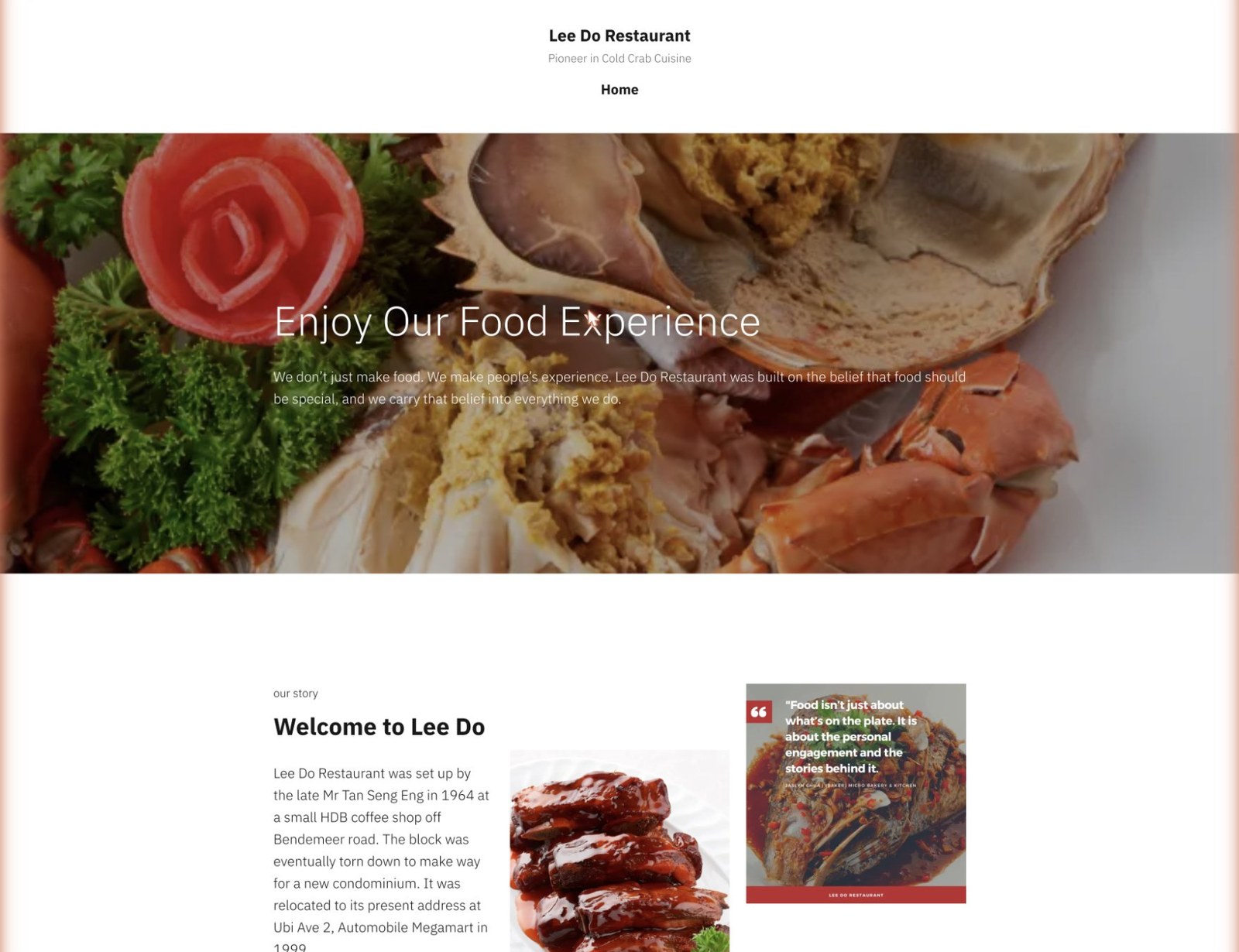
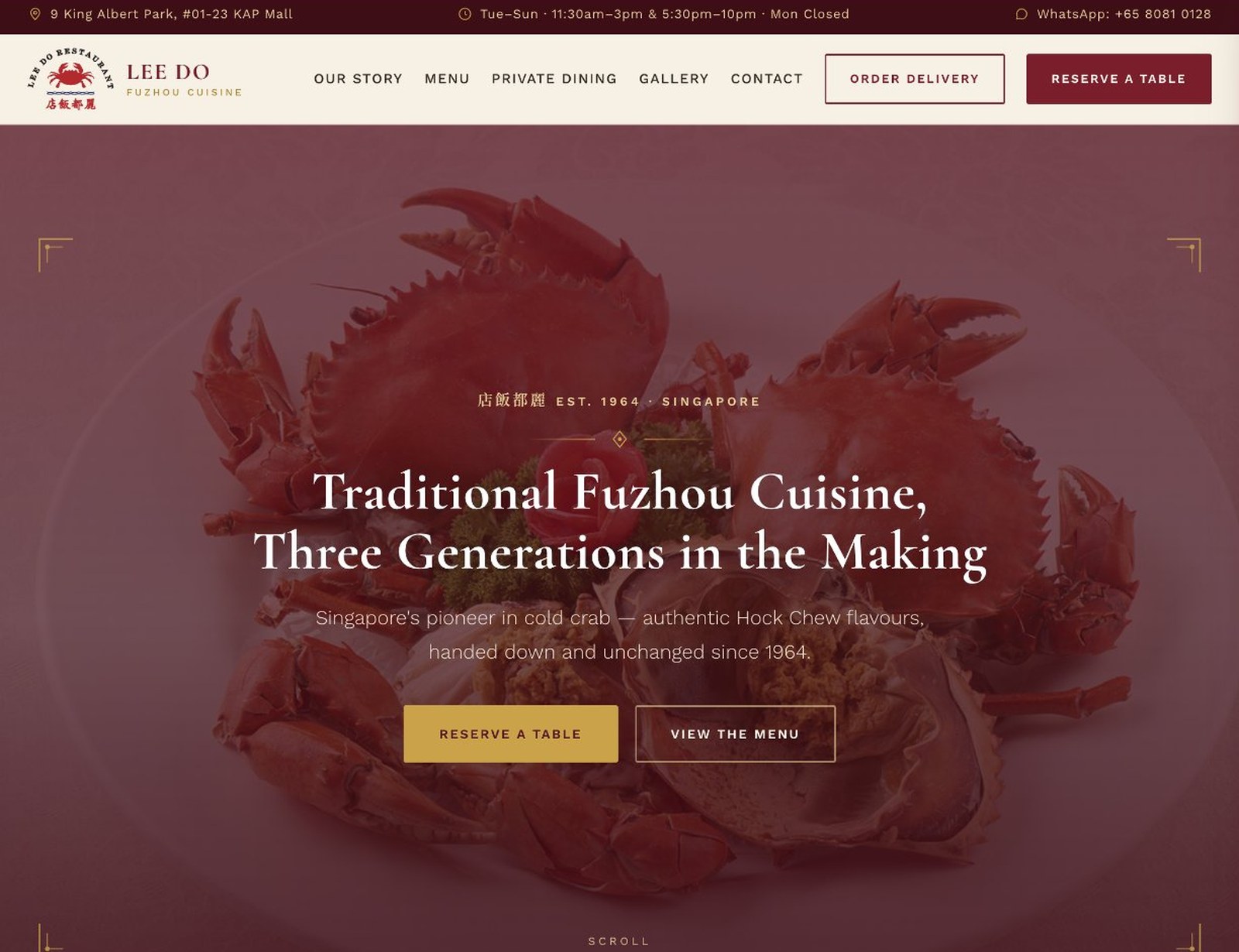
The same fold, rebuilt — drag the gold divider
Three moves, one goal.
One page became a place
Our Story, Private Dining, Contact and a full dish gallery each got their own room — twenty dishes with filters, where the old site showed three.
Heritage, made visible
麗都 beside the wordmark, EST. 1964 in the hero, and a trust bar carrying the claims that matter. The Chinese isn't decoration — it's the restaurant's own name.
Booking, three ways
A live Oddle booking system embedded straight into the page, with tap-to-call and a WhatsApp deep link beside it. Whichever way a diner prefers, it's one tap.
Closer to the plate.
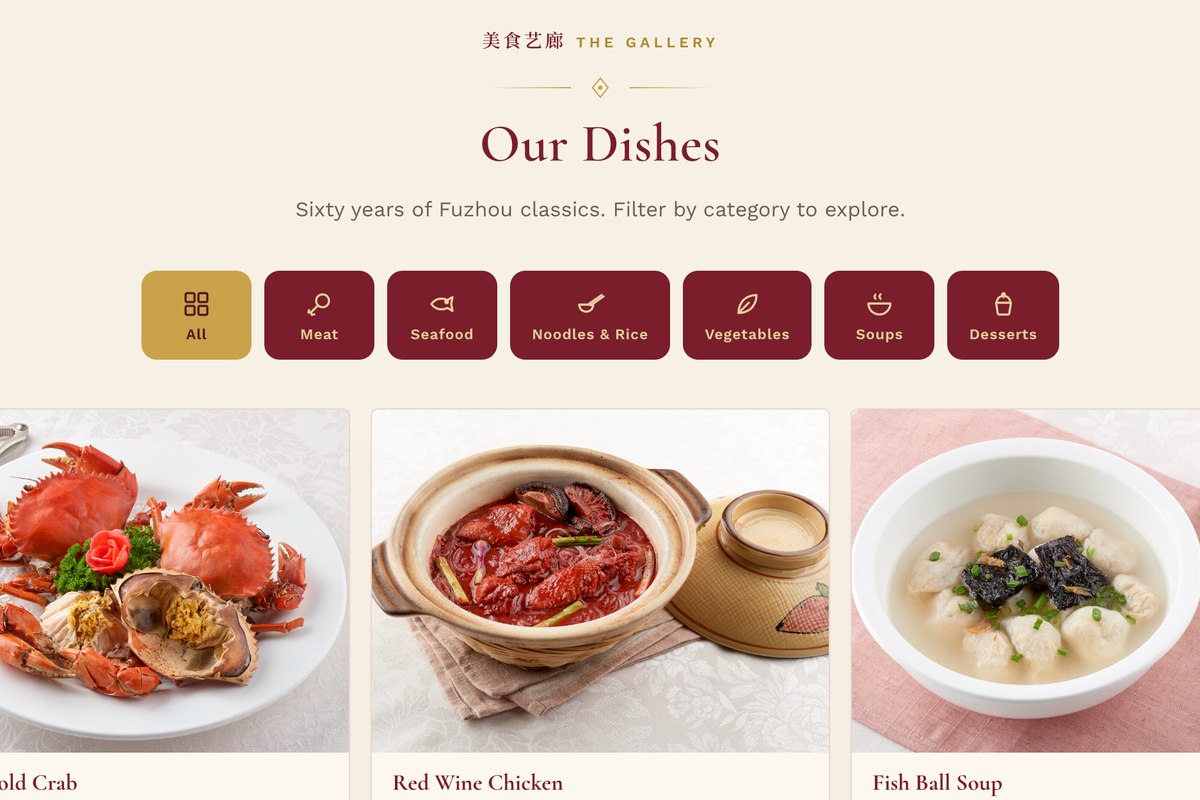 Twenty dishes, seven filters — the menu the kitchen actually cooks
 A live booking system, embedded — not a phone number and hope
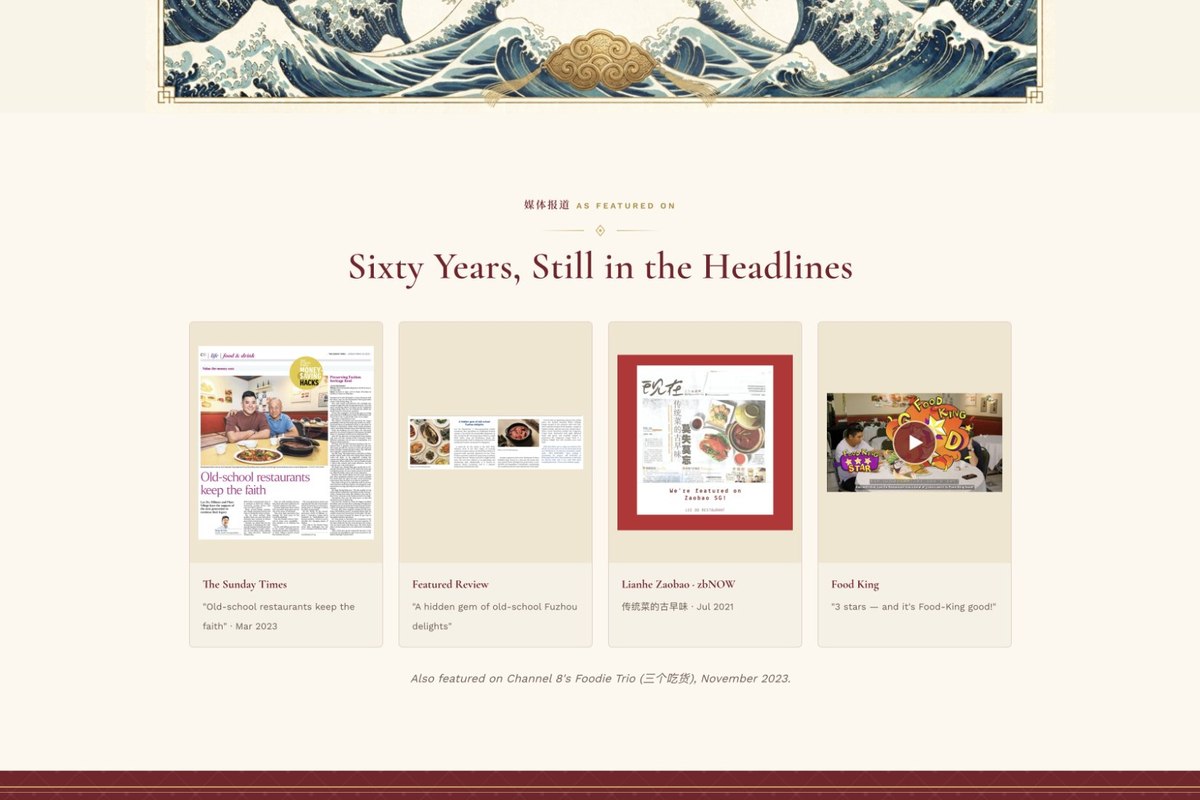 Sixty years of press, organised with quotes and dates
 The questions diners actually ask
 Sixty years of credentials, promoted to the fold
Where the decision actually gets made.
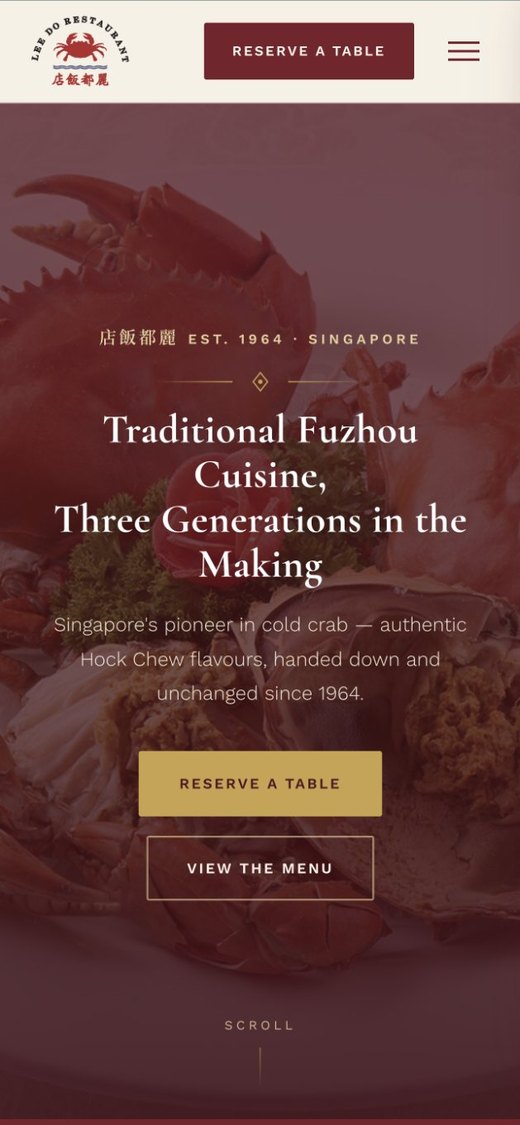
Most restaurant traffic is someone standing outside with a phone, choosing between here and the next place along. On the old site that person met pale text over a photo, then scrolled through three screens of history before reaching a single dish. The new one leads with the name, the year, and a button that books a table.

Sixty years, drawn as a line.
The old site told the history in one paragraph. The new Our Story page walks it — a Bendemeer coffee shop in 1964, the move east to Ubi in 1999, and today at KAP Mall under the third generation. Heritage frames are in place and waiting on the family's archive photographs.
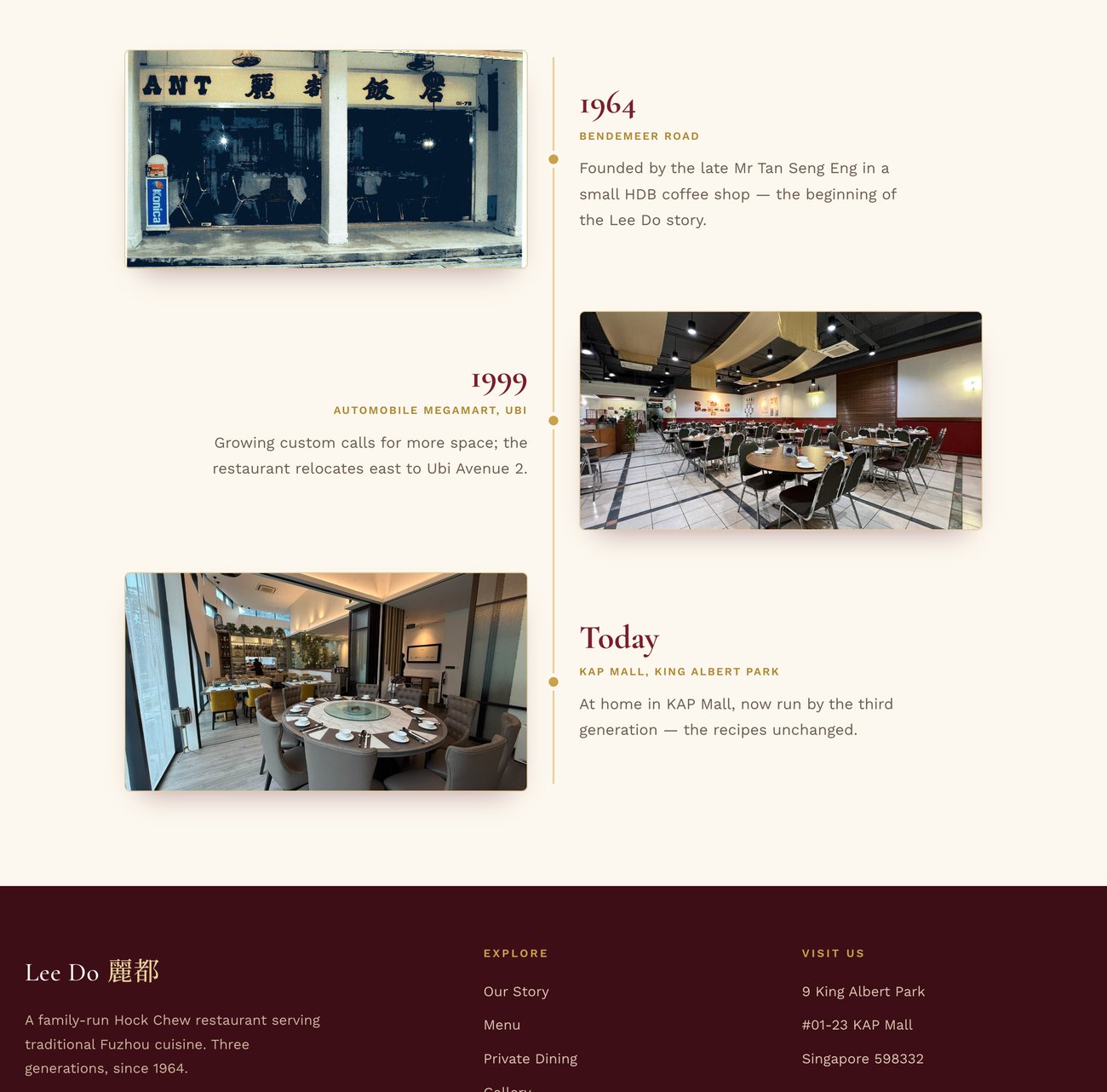
1964 Bendemeer Road → 1999 Automobile Megamart → today, KAP Mall
A table worth remembering.
Lee Do has always hosted the big occasions — reunion dinners, birthdays, company tables. The old website never mentioned it once, which meant every enquiry began with a phone call asking whether it was even possible.
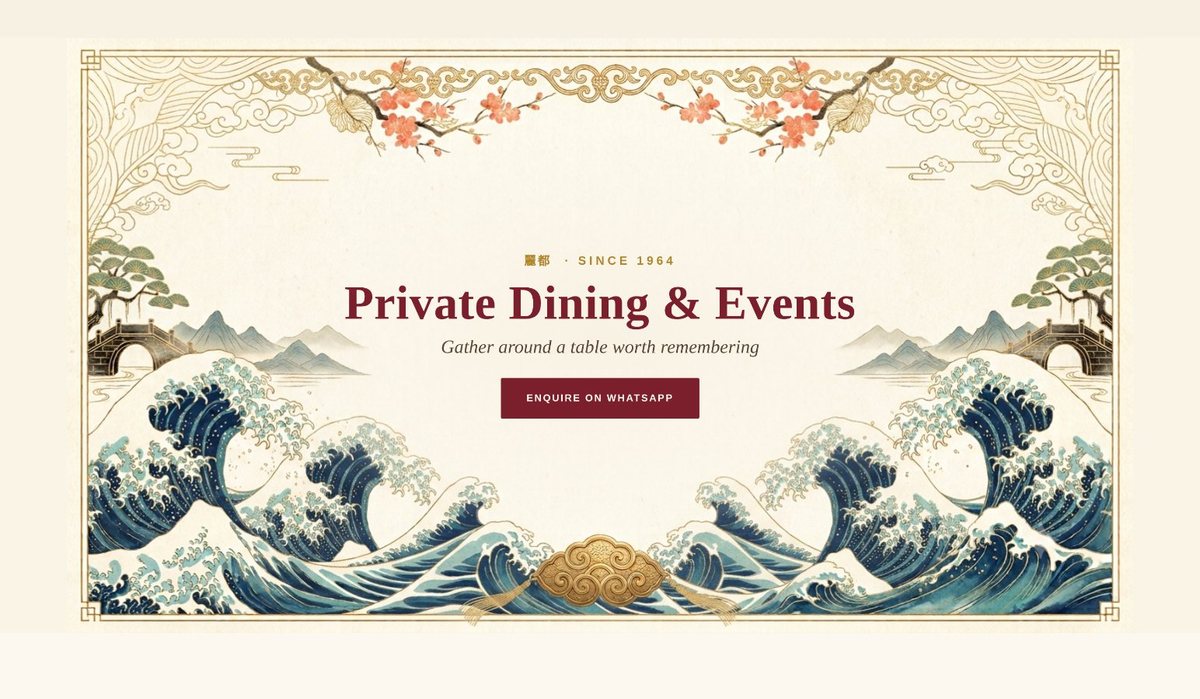
Private dining now has its own section, its own illustration, and a WhatsApp button that opens with the message already written. A revenue line that was invisible online is now two taps away.
Built to be found at 6pm on a Friday.
Restaurant websites live or die on local search. The new build carries a proper title and description, restaurant structured data, an embedded map, the nearest MRT line and parking — so when someone within a kilometre searches "Fuzhou food near me", Lee Do has something to show up with.